Growing up in an abusive household has had a constant ripple effect throughout my entire life. I have spent my life attempting to calm the pool. Ironically, attempting to calm waves by physical force creates more of the thing you are trying to stop. This internal and external battle has produced an attitude of apathy toward my importance in relationships. I don’t mean the ego, for I have plenty of that. I mean the genuine usefulness to the whole.
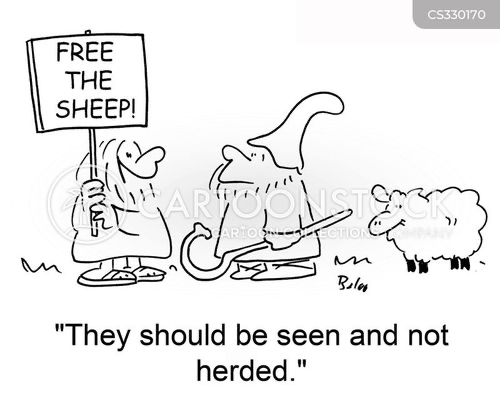
The parenting style of “be seen, not heard” has poorly prepared us to be contributing members in our churches, workplaces, and families, myself being a top offender. I am good at “not being heard,” and I have mastered “being seen.” I believe I have just realized, at age 37, this was never the way it was meant to be.
“Not being heard” is understood as don’t speak. When you reach the age at which you are mature enough to communicate an intelligent thought, you have no idea how to do it properly. “Being seen” refers to how you present yourself in public and to others—a facade. When too many of those “intelligent” thoughts build up behind the mask, they begin to break through in the most destructive ways: anger outbursts, isolation, and passive-aggressiveness.
When I observe myself, I can start to understand the root of this training. I wear my disapproval on my sleeve and discomfort in my posture. I carry the emotion on my shoulders. My entire childhood, I was not to be verbally heard; the only way the words came out was through my body. As an adult, I have had little practice in being listened to the right way.
Recently, two areas of my life have requested my voice: work and church. These requests have been odd because these two areas have been off-limits. Seen and not heard is what we have been taught from the beginning.
In my most recent performance review, I told my boss that this was a weird, new experience for me. I have not been accustomed to being heard this much. The childish passive-aggressive tendencies are no longer needed in this healthy environment because I am an adult.
When does passive-aggressiveness start? This behavior is born out of not being heard. A quick search in the world’s most trusted source, the internet, showed the life stage at which this behavior is typically adopted is in the teens. I do believe the behavior can be seen earlier. Still, I am attempting to make the point that true passive-aggressiveness is not intentional until later in life when you probably have your first intelligent contribution to society.
The vicious cycle escalates in every relationship because circular logic governs not being heard. If you do not know how to be heard, you do not know how to listen to others; if you cannot listen to others, you do not know how to be heard. The harder you argue this point, the more you prove its validity. These two character attributes always increase equally. It is impossible to have one without the other. Working on one will continuously improve the other.
My desire is to be heard in the right way. I am tired of defending the emotions on my sleeves like a dog constantly pooping in your friend’s houses. It is exhausting to continue this unconscious facade, especially when it is wholly undesired by all. The tricky part is that I do not know how. I am unaware of what it looks like to be heard and not seen.
To be heard and not seen sounds like a refreshing oasis, an ice bath on a hot day. Right now, it is a mirage. The more I try to focus, the blurrier it gets. The faster I walk, the deeper my legs sink into the sand. I need help to get there. I need people in my life to clarify the image. To practice with me and offer grace. I need to sacrifice self-protection and become invisible. When you are invisible, the fear is that people will forget you. No one wants to be forgotten.
In Galatians chapter 4, I see this same principle in parallel. Paul attempts to help the Galatians understand that they are now free and no longer obligated to be under a guardian and manager.
I missed the date set by my father as a child when I became a man. When I became responsible for the decisions I chose to make and was obligated to be heard, that transition evaded me. I cannot grasp it. I don’t know what it looks or feels like. I do not want my son to feel the same way.
Sons and Heirs
4 I mean that the heir, as long as he is a child, is no different from a slave, though he is the owner of everything, 2 but he is under guardians and managers until the date set by his father. 3 In the same way we also, when we were children, were enslaved to the elementary principles of the world. 4 But when the fullness of time had come, God sent forth his Son, born of woman, born under the law, 5 to redeem those who were under the law, so that we might receive adoption as sons. 6 And because you are sons, God has sent the Spirit of his Son into our hearts, crying, “Abba! Father!” 7 So you are no longer a slave, but a son, and if a son, then an heir through God.
 Nos & Rehtaf, Dnabsuh