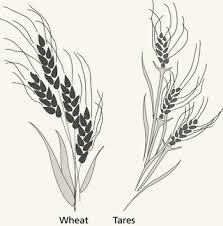
In Matthew 13:24-30, what message is Jesus trying to convey, and what is the application for our lives?
In this passage, I see method, source, and response.
First, the enemy’s method is the same as the one that sowed the good seed.
Secondly, the source the enemy uses is of the same kind, a seed. The enemy’s source is quite similar to wheat. There is a consensus that Jesus was referring to “darnel.” This was a weedy rye grass that looked similar to the wheat. The main difference was that “darnel” had a poisonous black seed.
Third, the master’s directive is counterintuitive to our typical Western response to a problem. This is the point that I want to spend the most time on because I believe it is the one we get wrong more times than we get it right.
We fall prey to the enemy’s desired response. The sweetest revenge for an enemy is to get us to harm ourselves in the name of good.
Today, when we have a problem or suspicion, our typical response is to attempt to prove our suspicion right or fix our problem. Jesus knew we liked to fix problems, and we were suspicious people. C.S. Lewis said, “Suspicion often creates what it suspects.”
This has practical applications to our lives in many ways. One of the main truths I see in this passage is a call to wisdom. More specifically, it is a call to a different practice of wisdom. Not a quick-to-judge wisdom, but a patient-to-act wisdom. A wisdom that trusts the process much more than it trusts the immediate results.
The immediate results action would sacrifice many good wheat in the name of good. The wise farmer knows that in patience, he does not have to sacrifice any good wheat. The good wheat will stay good because it was a good seed.
There is a subtle implied truth that lies amid this parable. The truth is the two plants during the infant stage are indistinguishable. Harvest time is when you can tell the difference. This truth is important because you may be able to discern the difference between harvestable wheat and a young darnel. However, you cannot discern between young wheat and young darnel. Guessing or assuming before harvest will always result in the uprooting of the good seed.
This is an interesting thought because the enemy has two basic options. The enemy can just destroy all the crops himself, or he can create a situation with the potential to maximize the damage. Every time a crop is planted, all the enemy needs to do is throw a few bad seeds, and the self-righteous will go to town. A few planting seasons later, the enemy won’t have to sow any bad seed. The self-righteous will continue their destruction because it was already based on an assumption. The assumption is that they can tell the difference.
I must recognize my limitations and the enemy’s craftiness. The enemy purposefully mirrors the method and source in hopes we will follow with an immediate response. The enemy knows what makes me most zealous. He knows he can do more damage if I attack the crop out of self-righteous weeding rather than him destroying all the crops himself.
Ultimately, will I sacrifice the short term to win the long game? I think I see this confirmed in the life of Jesus and the apostles. Their lives were a sacrifice to the immediate in service to the eternal.
 Nos & Rehtaf, Dnabsuh